‘Great writing is great writing, regardless of paper’

A reflection on reading and e-books during coronavirus by Writer in Residence Sean Russell.

ginsberg.jpg

On March 21, 2020, I tried to buy a book from Broadway Bookshop in Hackney – The Collected Poems of Allen Ginsberg 1947-1997. I felt that if I were to spend some time in isolation the best companion would be Ginsberg, for some reason or other. Lockdown had not yet begun at this point, but some non-essential businesses were forced to close or partially close. Broadway had decided to remain open, except you had to email ahead your order and pay online before picking the book up at the door to the shop. They were also doing book deliveries to those who had to self-isolate. They didn’t have the book in stock, and I would have to isolate without Ginsberg.

To me, and many others, bookshops are essential. As one would go to a pharmacy for paracetamol if one had a headache, one might also want to buy a book to ease the mental strain of living in this so-called new normal in which we find ourselves drifting anxiously through.

However, on March 23 all non-essential businesses, including bookshops had to close. Something had to give, habits would have to change, mine included.

***

I would regard myself as a lover of physical books to the depths of my very soul. I like to collect books, some of which I have no intention of ever reading, others I will read 10 times or more. I like the smell of new books, I like the smell of old books – second-hand books bring me some joys that new could never provide. I like books to line the walls and nooks, and pile high on the floors. It is hard to make a ‘messy’ pile of books, it is always beautiful.  There is something to finding a new bookshop that feels like walking into your home that I cannot explain. I never sell my books, I never throw them away. As a writer, I do not dream of my words being on screen but on paper in someone’s hands. Are you really a writer unless it’s on paper somewhere? And yet I have read more digital books since lockdown has begun than ever before.

Why? Well immediacy for one, at some point, early in this strange old lockdown, we were faced with long delivery times, sometimes unknown. On top of that I felt some paranoia about taking in items from the unsanitary outside world into my carefully cultivated germ-free chamber. And there is also a lingering and underlying feeling that in general I should be reading less physical books for environmental reasons (an issue with myriad pros and cons I will no doubt return to at a future time).

Has this changed my reading experience? I don’t think so, in some ways it is more pleasurable, you can read with one hand and highlight sections you like which are organised in a neat little list – although I haven’t yet once looked at this list again. If I didn’t have to buy from Amazon, I often think I’d buy all my novels and non-fiction books on my Kindle, although not art books or suchlike, that somehow defeats the point. I move flat a lot, I go abroad from time to time, heaving around a whole library becomes weary, sometimes it’s nice to read a book without acquiring more stuff. Stuff, stuff, all we have is stuff.

Digital book sales were already on the rise before all this, how many people will think like me and, having decided it was safer and easier to read digital during lockdown, continue that after? After all there are many people without the same qualms with Amazon as I, and then you’re faced with cheap, instantly deliverable books.

What future then? This remains to be seen somewhere out on the horizon. Many lovers of the physical book may have decided to try something new during lockdown and opted for ebooks, many of these will continue to buy at least some of their books digitally. Then which books do you buy digitally and which physical and what will that mean? I don’t believe that physical books will ever go away and their share of the market suggests as such, but our relationship to them may well change. I feel that there will be space only for the prestigious books, the beautiful books on my shelves – the rest may be digital; great writing is great writing, regardless of paper.

That is a strange relationship that I had not thought so much about. Does what I write change if on paper or on screen? My own perception is yes although totally inexplicable, some allusion to a tradition. My heroes all produced books, not blogs. To be a REAL writer you gotta BLEED on the page god damn it – so physical, so grounded. But great writers are all a product of their times, not their heroes’. Perhaps seeking to be in physical magazines, newspapers and hardback books is just a part of what Harold Bloom referred to as The Anxiety of Influence (a book I read in physical form these past weeks).

Audiobooks are also introducing new audiences to reading (is listening to an audiobook reading? If so, what is reading?...). Audibly amongst other services offer the same sanitarily instant service e-books offer, but with the added benefit that you can continue cleaning or doing yoga while you listen.

***

There was a subtle sadness when I received the email from Broadway Bookshop that they didn’t have the Ginsberg I was after. And here lies something wholly interesting at least to me, and I hope to you – I did not download the book on my kindle. I did not even think of it. I wanted those words, by that man, on paper, in my hands and on my shelf. I wanted to rustle through its pages, I wanted to write witty remarks in pencil that would make no sense to me in a year’s time. I wanted to write obscene odes on the window of the skull. There’s something about a book that connects you to the writer, something inexplicable. Having a collection of Ginsberg in my room felt somehow like having Ginsberg himself there, and that’s a feeling I’m not sure digital could ever reproduce. Draw your own conclusions, I have mine.

How many readers had similar lockdown experiences to mine I cannot say but I imagine that after all of this the habits of book readers will have changed. The independent stores will struggle more than ever before and there will be less on our streets as Amazon’s insidious hands reach inside our homes and minds and tighten its grip. People will feel that Amazon was there for us when we needed it after all… Digital books will continue their rise, as will audiobooks. But I have no doubt that the physical book will remain, in fact if only beautiful books are bought physically, then we may well see a lot more gorgeously designed books. And anyway, we’re going to have a lot of lockdown-inspired and written masterpieces to read next year. How will you be reading them?

Why take something inherently digital and make it physical?

‘I don't tend to see the digital and physical as an absolute binary’ – Writer in Residence, Sean Russell spoke to digital artist Dr. Richard Carter about art, poetry, electric literature, algorithms and the importance of creating something physical at the end.

(pic. Richard A Carter)

(pic. Richard A Carter)

“The book is the point,” said Richard. “The book is actually what they’re leading up to first and foremost. I mean yes many of these pieces could be done in digital format and I have explored these on a couple of occasions, but I've never really been very satisfied with it. I'm creating a mode of writing, a digitally generated mode of writing which I want to then appear in a codex format, I want it to be something you can hold in your hand and think about and perceive.”

In early February Dr. Richard A Carter, a lecturer in digital media at Roehampton University and a digital artist, spoke at the British Library about his work generating text with algorithms. He presented two works – Waveform and Swipe.

Waveform uses a drone, with a camera attached, to use algorithms to draw a line where the water ends, and the shore begins. This image is then translated into something resembling poetry; short, terse works of four lines generated by that combination of drone, camera, and code.

Waveform (pic. Richard A Carter)

Waveform (pic. Richard A Carter)

Swipe, uses predictive text and code to create a ‘swipe’ for each word, a glyph based on Google’s glide keyboard. By generating a swipe for each word – the movement a finger would make on the phone – and turning this into calligraphy. Richard is able to hint at another form of writing.

The works are fascinating and raise many questions. Why take something so inherently digital and present it in a physical book? Is it really poetry that the algorithms produce, is it art? And what do algorithms mean for the future of the written word?

“I don't tend to see the digital and physical as an absolute binary,” he said. “Because the digital is physical in so many ways. The nice thing about the book is it gives me an opportunity to really display that code at the same level as the outputs that its making whereas for most digital art, the code that enables it, is buried behind in the black box which is then projecting whatever we are seeing on the screen.”

He said that in creating books, he was trying to create a digital art that was as simple and elegant as what one would see on a canvas or in the pages of a “traditional” book. It was about bringing simplicity back to digital art, an artform which usually has a whole large infrastructure to go along with it.

Here he displays a shortened version of the code followed by the outcomes of the code. You are not bogged down in endless scrolling and more than anything it takes away the mystery of digital art and lays its working clear. How many digital artworks have I seen? How few have I wondered “what’s behind this?”

By bringing simplicity back Richard hopes to then make people think about the technology more closely. By taking something new and putting it in a traditional format we are forced to consider it properly.

Waveform (pic. Richard A Carter)

Waveform (pic. Richard A Carter)

But is it art?

“I've always had a fascination with literature and poetry in all its forms,” said Richard. “But I've also always had a long-standing interest in experimental literature and poetry; avant-garde, concrete poetry, visual poetry and these texts that push at the boundaries of what we understand writing to be, and how we display and present writing.”

This combined with a love of storytelling in video games and what could be created through this digital medium which perhaps was beyond that of the traditional book. Richard was able to put the two together with electronic literature.

Whether what the code generates is poetry or art does not really matter. It is part of far bigger question. Richard’s work is about creating another tool, something else to explore and push the boundaries of what we think about art, books, and writing.

“With waveform, it's not necessarily meant to be 'this is the new poetry of the 21st century' instead this is an experimental writing practice that is producing text that might remind us to a degree of how poetry works. There are other stories that we can tell here, other ways of seeing and thinking and that algorithms and digital technologies can play their own part, we're taking these tools and using them for our own ends.”

In some ways Richard’s work mirrors our present relationship to writing and hints of the future. Much of the writing we do in our day-to-day lives is predicted by algorithms. Phones guess the next words, email apps suggest us sentences. But we only consider what this means when put into a totally different context, taken out of the phone, the computer, and put into something like a book.

This was the technique used to create the sentence that runs through Swipe. Richard did not create an algorithm to generate the text here, instead he took advantage of what already existed on his phone, just tapping the Google-suggested word over and over again.

The sentence created was then turned into the corresponding glyphs which are presented in the book. This random form of text generation displays once again Richard’s interest in the human and non-human agency and how they interact. Whilst these words may appear random, they are based on algorithms which learned from how he writes. Did Richard see himself in that sentence that was created for him by his own phone?

Swipe (pic. Richard A Carter)

Swipe (pic. Richard A Carter)

“I don't know whether the ‘future will be a great weekend’ but nevertheless it felt right somehow that it was saying these things; it definitely carried that echo of me and the way I write.”

It’s less clear how these algorithms will affect the way we write to one another. Certainly text messages have affected our communication. Take the earlier days of mobile phones when a whole new language was developed for speed of communication “How R U?” Then as smart phones arrived, full words returned, and emojis were added. The technology we use undoubtedly affects our language use.

“The Google Gmail application on your phone now gives you pre-made sentences. I don't use them because they seem so brutally short, sort of vaguely: ‘yeah, sure, whatever’ and it’s like ‘no, I want to get something of me across in my writing, I don't want to just let the phone give like a three word answer because it feels rude somehow.”

Will algorithms affect our language? Undoubtedly. Will they change longform writing, personal emails, letters, novels, poetry? Less likely. 

Richard’s work is about exploration, not necessarily answers. Whether the words in Waveform are poetry, or whether the glyphs in Swipe are art is not what is important. What is important is the exploration of the questions raised by these books. What we can do with this technology to find new ways to tell stories, new ways to write. Just because something starts digitally, doesn’t mean it has to end digitally. By making books Richard makes us consider them beyond just an image on a screen, we see into the “black box”, we are forced to compare them with other forms of art, to poetry; and that is the whole point – to experiment. Just because something isn’t written by a human doesn’t mean we don’t need to consider it, and the process behind it. These are new ways of thinking about writing and storytelling.

You can view more of Richard’s work, and purchase copies of his books here. And follow him on Twitter here.

Follow Mazzotti Books' Writer in Residence with our newsletter and receive all of our posts straight to your inbox here.

Mycelium Books

tumblr_okyaz9rEsB1rt60fvo4_1280.jpg
tumblr_okyaz9rEsB1rt60fvo1_1280.jpg
tumblr_okyaz9rEsB1rt60fvo2_1280.jpg
tumblr_okyaz9rEsB1rt60fvo3_1280.jpg
tumblr_okyaz9rEsB1rt60fvo5_1280.jpg

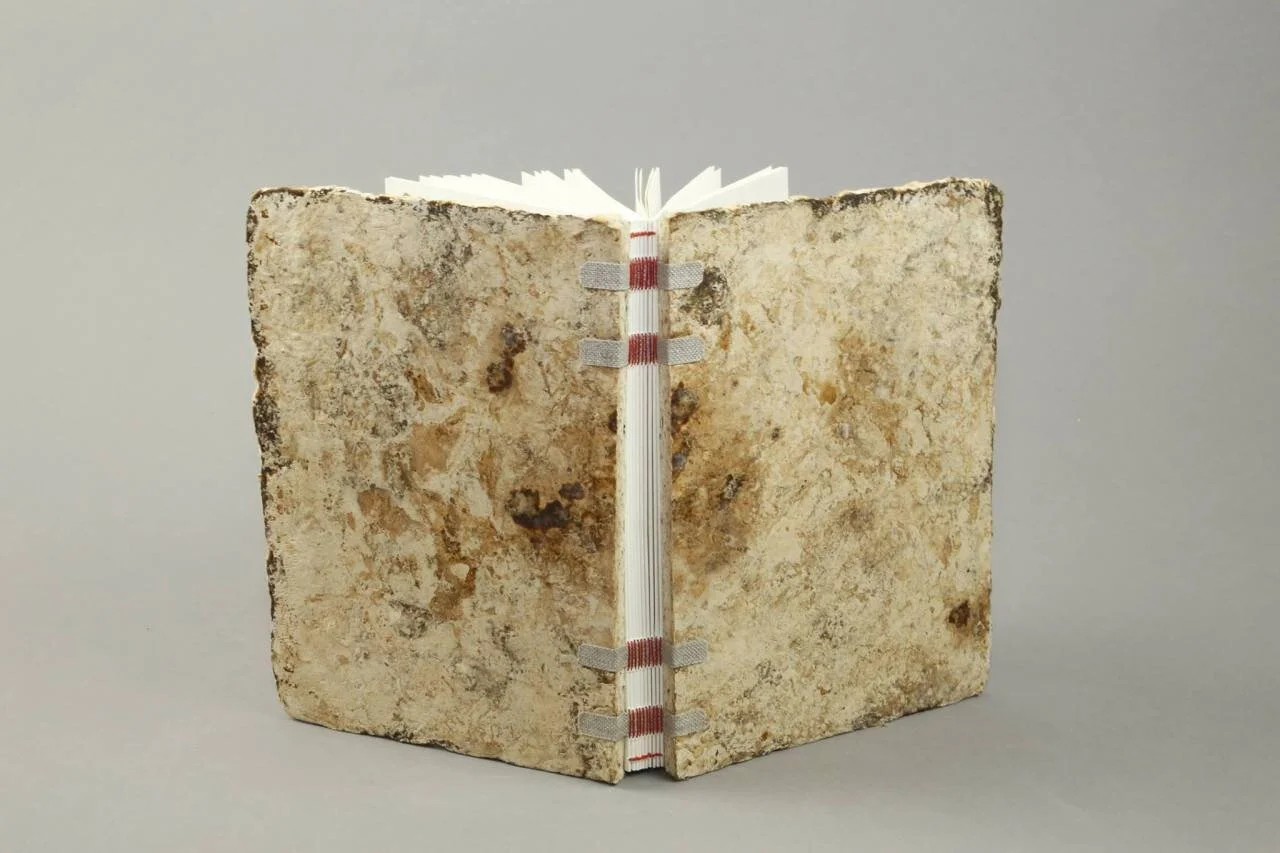
What could mycelium materials be used for…?

…the potential applications are countless and here at the studio we’re constantly exploring a wide variety of those…

…as, for instance, utilising pure fungal materials as alternative to animal leather, traditionally implemented in book-making.

The Mycelium Books, part of “The Growing Lab - Mycelia” collection, are an ongoing exploration carried out by Officina Corpuscoli in close collaboration with  MAZZOTTI BOOKS/London, an independent bookbinding and letterpress studio.

The Growing Lab: http://www.corpuscoli.com/projects/the-growing-lab/

Mazzotti Books: https://mazzottibooks.co.uk/

#Mycelium #Book #AnimalFree #VeganBook #MaterialCulture #Fungi #Craft #Innovation

tumblr_myo2q9JnrZ1sizr65o2_400.jpg
tumblr_myo2q9JnrZ1sizr65o3_400.jpg
tumblr_myo2q9JnrZ1sizr65o10_400.jpg
tumblr_myo2q9JnrZ1sizr65o9_400.jpg
tumblr_myo2q9JnrZ1sizr65o8_400.jpg
tumblr_myo2q9JnrZ1sizr65o7_400.jpg
tumblr_myo2q9JnrZ1sizr65o1_400.jpg
tumblr_myo2q9JnrZ1sizr65o6_400.jpg
tumblr_myo2q9JnrZ1sizr65o5_400.jpg
tumblr_myo2q9JnrZ1sizr65o4_400.jpg

maybeitsgreat:

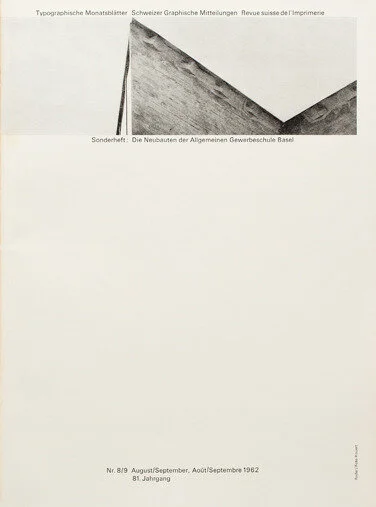
Typographische Monatsblätter ™ 

Cover Design Issue 1, 2, 3, 4, 5-6, 7, 10, 11, 12
André Gürtler
Bruno Pfäffli

Cover Design Issue 8-9
Emil Ruder

Typeface
Univers

Source: https://garadinervi.tumblr.com/post/717395...