




Intricate Japanese Movable Type Sets
Dark Roasted Blend provides some history and great photos on the subject of early Japanese (and Asia) printing:
Craft letterpress companies are experiencing a revival in recent times, and nowhere it is more evident than in Japan. Most of you will be familiar with the ancient Chinese and Japanese art of woodblock printing, but masterpieces created with wood and metal movable type are somewhat lesser known, although they show craftsmanship and attention to detail similar to fine woodblock prints.
The first movable type and printing presses were invented in Asia, not Europe.
…but their development stalled because of the extreme complexity and sheer number of Chinese and Korean characters (the same problem that the Asian cultures faced with the transition to typewriters and the internet). We can thank the simplicity of Western alphabets for the rapid development and adoption of the printed word in Europe, which quickly lead to the Renaissance and further advances in culture and education.
It is a widespread misconception that Johannes Gutenberg created the first movable type system and the printing press, around 1450 A.D. It’s true, Gutenberg was the first to make his movable type from a certain alloy of lead, tin, and antimony (which was more efficient than iron, used in Asia) - but movable type itself was originally invented in China around 1040 A.D. by Bi Seng (during the Song Dynasty). The new system was badly needed to replace the labor-intensive woodblock printing technique, where a single wooden block was carved to represent a single page.More interesting information and great photos on the subject can be found at Dark Roasted Blend here
(via prostheticknowledge:)
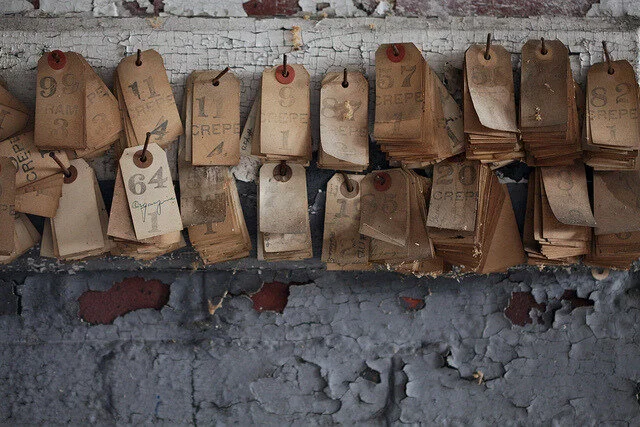


Roman Opałka was a French-born Polish painter who painted numbers. In 1965 he began painting a process of counting – from one to infinity. Starting in the top left-hand corner of the canvas and finishing in the bottom right-hand corner, the tiny numbers were painted in horizontal rows. As of July 2004, he had reached 5.5 million. (via triangulation)
Typecaster for life

Dapper anatomy - Bailliere’s popular manikin
David Pearson, London
(by walkerartcenter)


Stillness in Motion
by Olga Ziemska


Artist: Jacob Dahlgren - item 1; subject of art, 2012
hmmmm….pencils…..


a couple of new pieces from Michigan-based book artist Thomas Allen


Nietzsche knew a thing or two about the filter bubble…
Lovely philosophy posters by Max Temkin embody in bold typography and astute insight what philosophy is.

Quisque iaculis facilisis lacinia. Mauris euismod pellentesque tellus sit amet mollis.